
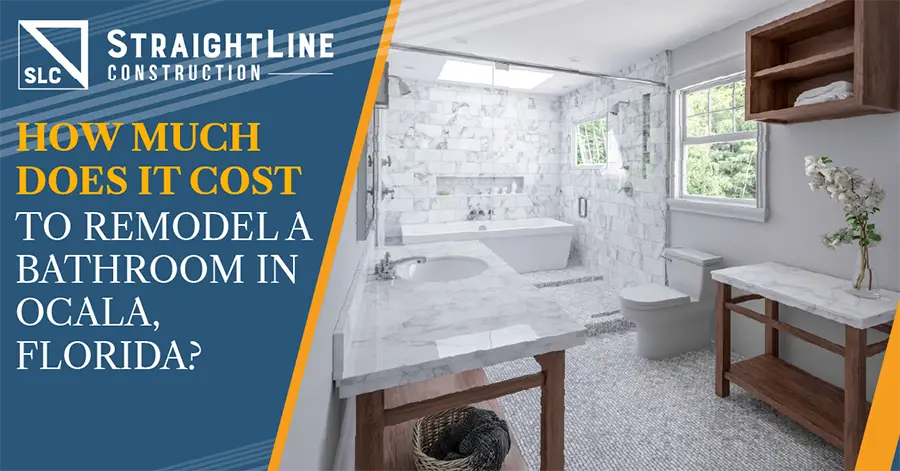
Remodeling a bathroom in Ocala and throughout Marion County does not have a fixed price, but most projects typically range between $20,000-$30,000 for a guest or secondary bathroom and $30,000-$50,000 for a primary bathroom, depending on the scope and level of finishes. The final cost is influenced by several key factors, including the size of the bathroom, layout changes, tile selection, vanity and fixtures, labor, and structural modifications.
In this guide, we break down each of these factors so you can better understand what drives the cost of a bathroom remodel in Ocala and throughout Florida. At the end of this guide, we’ll walk you through two real examples, the costs of a small guest bathroom remodel, and the cost of a large primary bathroom remodel, with a full cost breakdown.
What Factors Affect the Cost of a Bathroom Remodel in Ocala, Florida?
The cost of a bathroom remodel is primarily driven by a set of key factors that determine the scope, materials, and level of customization involved. Understanding these factors can help you better plan your project and set realistic expectations. Below is a breakdown of the main elements that influence the overall cost:
- Bathroom size and type (guest bath, primary bath, or half bath)
- Scope of work (cosmetic refresh vs. full remodel)
- Tile selection (floor, walls, and shower surround)
- Vanity and cabinetry
- Countertops and sinks
- Fixtures (faucets, showerheads, tub, toilet)
- Shower and tub configuration
- Lighting and electrical updates
- Plumbing and fixture relocation
- Structural changes (walls and layout)
- Permits and inspections
- Labor and project management
- Design and planning
Each of these factors can significantly influence the final investment, especially in high-end bathroom remodels commonly found in Ocala and throughout Marion County.
Bathroom Size and Type
The size and type of bathroom plays a major role in the overall cost. Larger bathrooms require more tile, more fixtures, and more labor. Primary bathrooms often involve higher-end finishes and more complex layouts, while half baths are simpler in scope. The existing layout also matters: keeping plumbing in place is more cost-effective, while relocating fixtures adds complexity and expense.
Scope of Work (Cosmetic Refresh vs. Full Remodel)
The overall scope of work is one of the biggest cost drivers. A cosmetic refresh like updating paint, fixtures, lighting, and accessories is generally more budget-friendly because it avoids major construction. A full remodel involves replacing tile, reconfiguring the shower or tub, updating all plumbing fixtures, and potentially moving walls. The more extensive the scope, the more trades, materials, and time are required, which increases the overall project cost and complexity.
Tile Selection (Floor, Walls, and Shower Surround)
Tile is one of the most visible and impactful choices in a bathroom remodel, and it significantly affects the budget. Material options range from basic ceramic to premium porcelain, natural stone, or decorative mosaic, each with different price points and installation requirements. Large-format tiles, intricate patterns, or custom layouts require more labor and precision. The total square footage of tile including floors, shower walls, and any accent areas will directly impact both material and installation costs.
Vanity and Cabinetry
The vanity is the centerpiece of most bathrooms, and the style, size, and quality you choose will have a meaningful impact on the budget. Stock vanities are the most affordable option and come in standard sizes, while semi-custom and custom cabinetry offer more flexibility in dimensions, finishes, and storage configurations. Custom vanities provide the highest level of personalization but may come at a higher cost due to specialized design and craftsmanship.
Countertops and Sinks
Countertop and sink selection plays both a functional and aesthetic role in the bathroom. Material choices such as cultured marble, quartz, granite, or solid surface vary in cost, durability, and appearance. Undermount sinks, vessel sinks, and integrated sinks each have different price points and installation requirements. Larger vanities or more complex configurations will require more material and labor, increasing the overall investment.
Fixtures (Faucets, Showerheads, Tub, Toilet)
Fixtures can vary widely in price depending on brand, finish, and features. Standard fixtures are cost-effective and meet the needs of most households, while designer or high-end fixtures offer premium finishes and performance. Upgrading to a freestanding tub, a multi-function shower system, or a comfort-height toilet can add to the overall scope. Fixture selection directly influences both the budget and the installation requirements, especially if new plumbing connections are needed.
Shower and Tub Configuration
The design of the shower or tub area is often the most complex and costly component of a bathroom remodel. Converting a tub to a walk-in shower, installing a frameless glass enclosure, or adding a freestanding soaking tub each come with different material and labor costs. Custom tile work, built-in niches, benches, or multi-head shower systems add both value and complexity. The configuration you choose will significantly shape the overall scope and budget of the project.
Lighting and Electrical Updates
Lighting and electrical work are essential for both function and atmosphere in a bathroom remodel. Updating vanity lighting, adding recessed lights, or installing dimmer switches can enhance the space but also increase costs. Electrical upgrades may be necessary to meet current building codes, especially for outlets near water sources or for heated floor systems. Changes to wiring or outlet placement add complexity, particularly in older homes where existing systems may need updating.
Plumbing and Fixtures
Plumbing costs depend on whether existing lines can stay in place or need to be relocated. Simple upgrades like replacing a faucet or showerhead are straightforward, while moving the toilet, shower, or sink can significantly increase labor and material costs. The extent of plumbing work required will influence both the timeline and the overall budget, particularly if walls or floors need to be opened to access existing lines.
Structural Changes (Removing Walls, Reconfiguring Space)
Structural modifications can have a major impact on the cost and complexity of a bathroom remodel. Removing walls to expand a primary suite, combining two smaller bathrooms, or reconfiguring the layout often requires additional engineering, permits, and specialized labor. Load-bearing walls require careful planning and reinforcement, which increases both time and expense. These changes may also affect electrical, plumbing, and HVAC systems, further adding to the overall scope.
Permits and Inspections
Permits and inspections are required for most bathroom remodels involving structural, electrical, or plumbing work. The traditional permitting process can take months, but there’s another option with private permit providers. They handle the plan review for the county, schedule inspections within a one-hour window, and video record them, keeping your project on schedule and progressing smoothly. It costs a little more, but saves significant time. Either way, permits and inspections protect you and ensure the work is done right.
Skilled Labor and Knowledgeable Project Management
Skilled labor and craftsmen typically make up one of the largest portions of your bathroom remodel budget, covering contractors, tile installers, plumbers, and electricians. The complexity of the project, the number of trades involved, and the overall timeline all influence labor costs. Knowledgeable project management also plays a key role in coordinating schedules, materials, and workflows to keep the project on track. Well-managed projects tend to run more efficiently, but they still require time and expertise, which contributes to the overall investment.
Design and Planning
Design and planning are critical steps that shape the outcome of the entire remodel. This phase includes layout development, tile and fixture selection, and coordination of all project details before construction begins. Working with a designer or planning professional can help optimize the space and avoid costly mistakes during construction. A successful project is a well-planned project.
Bringing Your Bathroom Up to Code
All toilet rooms now require an exhaust fan, especially in a concealed room without a window. Outlets near sinks and water sources also need to be GFCI protected. These updates are required by current building code, and we make sure every remodel meets these standards.
Protect Your Investment
Proper waterproofing isn’t always required by code, but it’s one of the most important parts of a bathroom remodel. We make sure every shower pan can hold water for 24 hours without looking so your new finishes and your home is protected for years to come.
Example of a Small Bathroom Remodel Project in Ocala, FL With Cost
We recently completed a bathroom remodel for a homeowner right here in Ocala. When they first came to us, they had a clear vision, but like most bathrooms, the space had other ideas. Here’s how the project came together, and what it actually cost.
What the Client Wanted: Secondary/Guest Bath (approx 10’ x 5’)
The client came to us wanting to:
- Convert their existing tub to a shower, with minimal grout and a solid surface shower surround
- Add an exhaust fan for humidity control
- Remove the outdated fluorescent soffit lights
- Add a rain head along with a second shower head
- Add shower glass instead of a curtain
- Update bath accessories
- Add more storage
- Move the vanity and toilet to make room for additional storage
It was an ambitious list for the space they had, and that’s exactly where our experience comes in.
What We Recommended Instead
After walking the space, we saw an opportunity the client hadn’t considered. A solid surface shower surround can be a very expensive update, so we recommended large format tile with an epoxy grout, which alleviated the client’s concerns about grout staining and cleaning while keeping costs in check. When we removed the outdated fluorescent light box, we eliminated the vanity light and added recessed can lights and wafer lights for better, more even illumination. Instead of moving plumbing fixtures, which would have added significant cost, we recommended demoing the old framed linen closet and replacing it with cabinet storage that includes roll-out trays, giving the client more storage and a better overall look without the expense of relocation.
By rethinking the surround material, the lighting plan, and the storage layout, we were able to value-engineer everything the client originally asked for, and then some.
How It Turned Out
The finished bathroom included:
- An all-wood construction vanity and cabinets
- A quartz countertop with high-end Delta and Kohler plumbing fixtures
- Large format tile
- Better lighting
- A quiet exhaust fan with 2.5 times the CFM for improved air movement and humidity control
- We also added better storage with cabinet organizers and rollouts, all without moving any structural walls. From demo to final walkthrough, the project took 4-6 weeks. The client went from a bathroom that didn’t feel like theirs to one
- they’re proud to show off.
The Budget Breakdown
This was a standard bathroom remodel, meaning we removed everything and put it back where it was, with all-new materials and finishes. No walls moved, no layout changes.
Here’s exactly where the money went, with a total budget of $23,350*:
- Labor: $12,800
- Tile: $2,000
- Vanity/cabinetry: $750
- Countertops: $950
- Plumbing fixtures: $1,200
- Electrical fixtures: $250
- Bathroom accessories and mirror: $400
- Miscellaneous construction supplies (drywall, framing, paint, etc.): $5,000
Optional Upgrades Available
For this project, the client was pleasantly surprised with the cost and decided to make some of the optional upgrades we offer.
These are extras that can be added to any standard remodel:
- Removing framed linen closet and replacing with cabinet with rollout trays for more storage: $1,500
- Added frameless shower glass with enduro-shield coating, which prevents calcium, lime, and rust stains and makes it easier to clean: $2,500
New Total: $27,350
Example of a Large Primary Bathroom Remodel Project in Ocala, FL With Cost
We also recently completed a primary bathroom remodel for a homeowner in Ocala who wanted a true spa-like retreat. When they first came to us, they had a clear vision, but like most bathrooms, the space had other ideas. Here’s how the project came together, and what it actually cost.
What the Client Wanted
The client wanted to:
- Replace the tub and shower with a solid surface surround for less grout
- Add a second sink
- Enclose the toilet in a private room
- Add a bidet
- Add a zero-entry, ADA curbless shower
- Create an expanded shower with two shower heads, niche built-ins
- Update the lighting with backlit mirrors
- Remove the makeup vanity and replace it with storage
What We Recommended Instead
After walking the space, we saw an opportunity the client hadn’t considered. Being that this is a primary bathroom, our goal was to meet or exceed most of the client’s expectations while still completing the work under their budget, so we focused on what would deliver the most value first.
We eliminated the large outdated garden tub from the scope of work, because the client realized it was rarely used and unneeded, and removing it saved money on materials and labor while freeing up a lot of unnecessary space. A solid surface shower surround can be a very expensive update, so we recommended large format tile with an epoxy grout, which alleviated the client’s concerns about grout staining and cleaning. In lieu of a tiled shower bench, we recommended an attractive removable teak bench for added storage on the bottom shelf and better use of space.
By eliminating the underused tub, choosing tile and grout that delivered the same clean look for less, and swapping a built-in bench for a removable teak one, we were able to value-engineer everything the client originally asked for, and then some.
How It Turned Out
The finished bathroom included:
- An all-wood construction vanity and cabinets
- A quartz countertop
- High-end Delta and Kohler plumbing fixtures
- Large format tile
- Improved lighting
- Quiet exhaust fan with 2.5 times the CFM for improved air movement and humidity control
- More cabinet storage with cabinet organizers and rollouts without moving structural walls
From demo to final walkthrough, the project took 6-8 weeks.
The Budget Breakdown
This was a standard bathroom remodel, meaning we removed everything and put it back where it was, with all-new materials and finishes. No walls moved, no layout changes.
Here’s exactly where the money went, with a total budget of $39,850*:
- Labor: $19,800
- Tile: $3,500
- Vanity/cabinetry: $3,700
- Countertops: $2,800
- Plumbing fixtures: $1,900
- Electrical fixtures: $500
- Bathroom accessories and mirror: $650
- Miscellaneous construction supplies (drywall, framing, paint, etc.): $7,000
Optional Upgrades Available
For this project, the client was pleasantly surprised with the cost and decided to make some of the optional upgrades we offer.
These are extras that can be added to any standard remodel:
- Removing framed linen closet and replacing with cabinet with rollout trays for more storage: $1,500
- Added frameless shower glass with enduro-shield coating, which prevents calcium, lime, and rust stains and makes it easier to clean: $2,900
- Added a shower head and upgraded to a linear shower drain: $750
- Moved plumbing to add an additional sink: $750
- Removed concrete under the shower and lowered the shower pan to create a zero entry shower: $2,500
New Total: $48,250
Thinking About Your Own Bathroom?
Every bathroom is different, and so is every budget. But projects like this one show what’s possible when you work with a team that knows how to find the opportunity in a space, not just execute a checklist. If you’re in the Ocala area and thinking about a remodel, give us a call today to schedule your free bathroom remodel consultation!
*This project reflects current pricing in June 2026.